
Setsuyaku Life / Guides
Seven days with the clothes you own: find what your wardrobe really needs
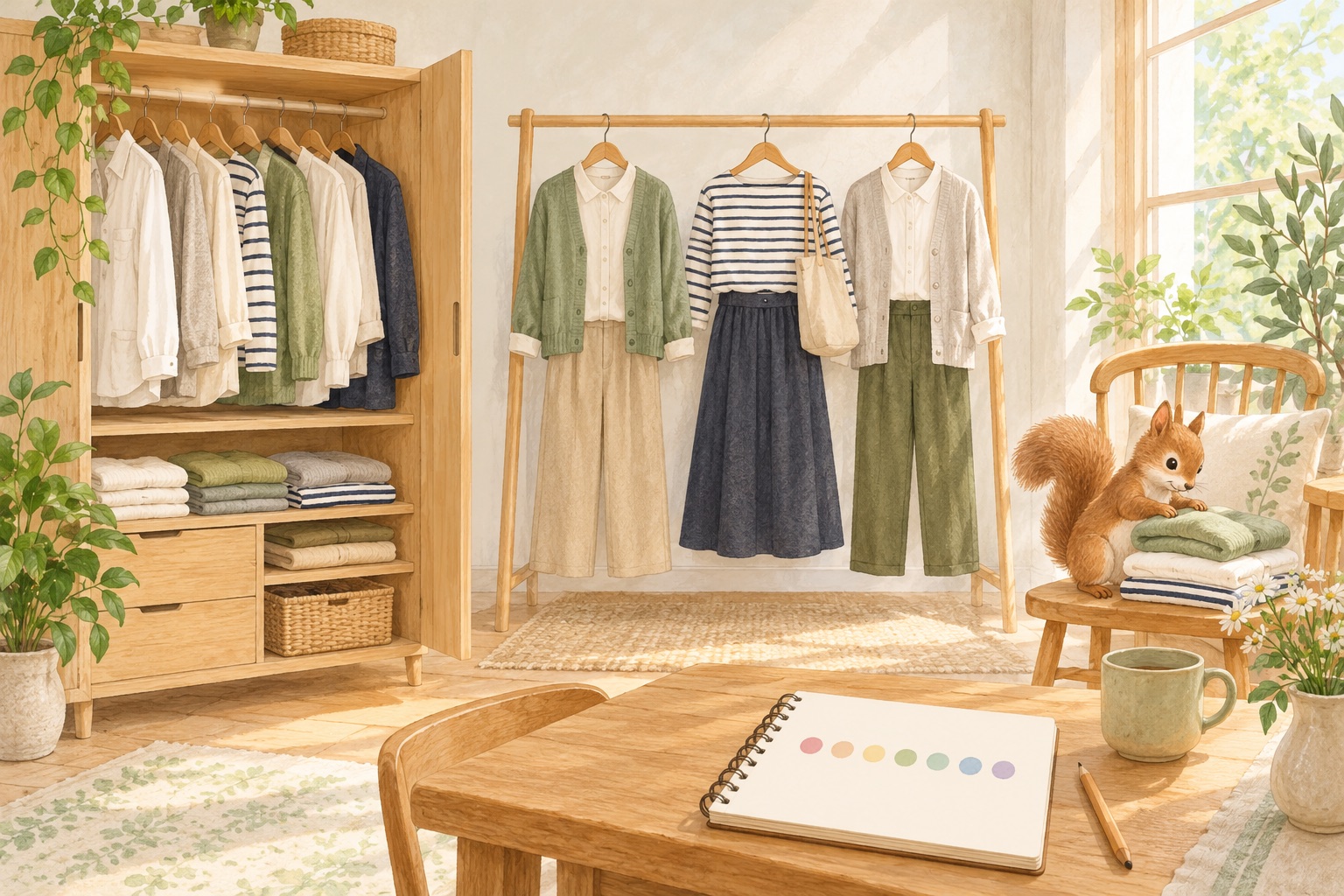
“Plenty of clothes, but nothing to wear”? Try a week with what you own before shopping. Briefly note outfits and awkward moments to identify a genuinely useful next piece.
Record difficult situations, not just “missing clothes”
A shop outfit can look lovely, then be hard to match at home. To avoid that, make “I need more clothes” a little more specific.
For example: “I have no light layer for a morning walk” or “I struggle to match a jacket with these trousers.” These are hypothetical situations showing a purpose more clearly than simply wanting something new.
If the answer is unclear, leave one line on paper or your phone about the difficulty. Start with where you will wear it before considering price or trends.
Spend the first ten minutes choosing clothes for the current weather
You need not empty the wardrobe. Take out a few frequently worn tops and bottoms that suit the current weather. Ten minutes is a guide, not a deadline.
Easy-to-match pieces, comfortable ones and those needing washing can look different once laid out. You need not include damaged or uncomfortable clothing in the week’s selection.
Avoid a new hanger or storage shopping trip at this stage. Existing hangers or a chair back are enough to see combinations. Choose tomorrow’s outfit before perfecting storage.
Three fields are enough for a week’s outfit notes
Record the outfit, occasion and difficulty. Daily photos or detailed scores are unnecessary; a few words about colours or shapes can jog your memory.
The table below shows fictional example entries for a few days in a week. They are not the author’s clothes or activities. Adapt them to your weather, laundry routine and work or school dress requirements.
A day at home can be one line. A missed day can stay blank. The aim is to understand ordinary choices, not keep seven perfect consecutive records.
| Occasion and outfit | Brief note |
|---|---|
| Nearby outing: white top + navy trousers | Easy to move in; worth repeating |
| Cooler day: the same outfit + cardigan | An existing layer worked |
| Smarter outing: shirt + the same trousers | Try one jacket combination next time |
Repeating an outfit is a useful discovery too
The same clothes may appear repeatedly. That can mean they fit your present life rather than that your wardrobe is dull. If they feel good and move well, you need not force more combinations.
For rarely worn pieces, consider one reason: no obvious match, or slow drying after washing, for example. Treat it as a clue for another try rather than immediately deciding to discard it.
There is no need to post outfits or seek ratings. Keep notes or photos somewhere useful for your own review.
Consider one missing item by the job it needs to do
Consider buying only when the same difficulty appears repeatedly. A role such as “works with two existing outfits for everyday outings” is clearer than “some kind of outer layer.”
- Consider combinations of existing clothes first.
- Check whether care or a simple alteration could help.
- If something is missing, decide the occasion and budget before comparing.
Alterations cost money too. Compare care, repair and wearable condition as well as the new-item price. Repair is not automatically cheaper.
Start with tomorrow’s outfit; seven days is a loose guide
If a week feels burdensome, start with tomorrow’s outfit. Note either that it worked or what felt difficult. Both are useful.
Clothing needs change with seasons and life. Aim to understand why you buy, rather than live forever with the same clothes. This is not a method for denying necessary clothing.
Finding an untried combination is a useful result too. Before rushing to shop, give existing clothes another opportunity.
Final checklist
- Choose tomorrow’s outfit from existing clothes
- Note the outfit and any difficulty in one line
- Before buying, consider whether it fits two existing outfits
- Choose necessary clothes with an occasion and budget in mind
About this article
This article offers everyday ideas. Scenes and notes are explanatory examples, not the author’s experiences or results. It does not guarantee savings or fewer purchases. Images are illustrations.