
Setsuyaku Life / Guides
Enjoy the stationery you already have: small savings from a desk drawer
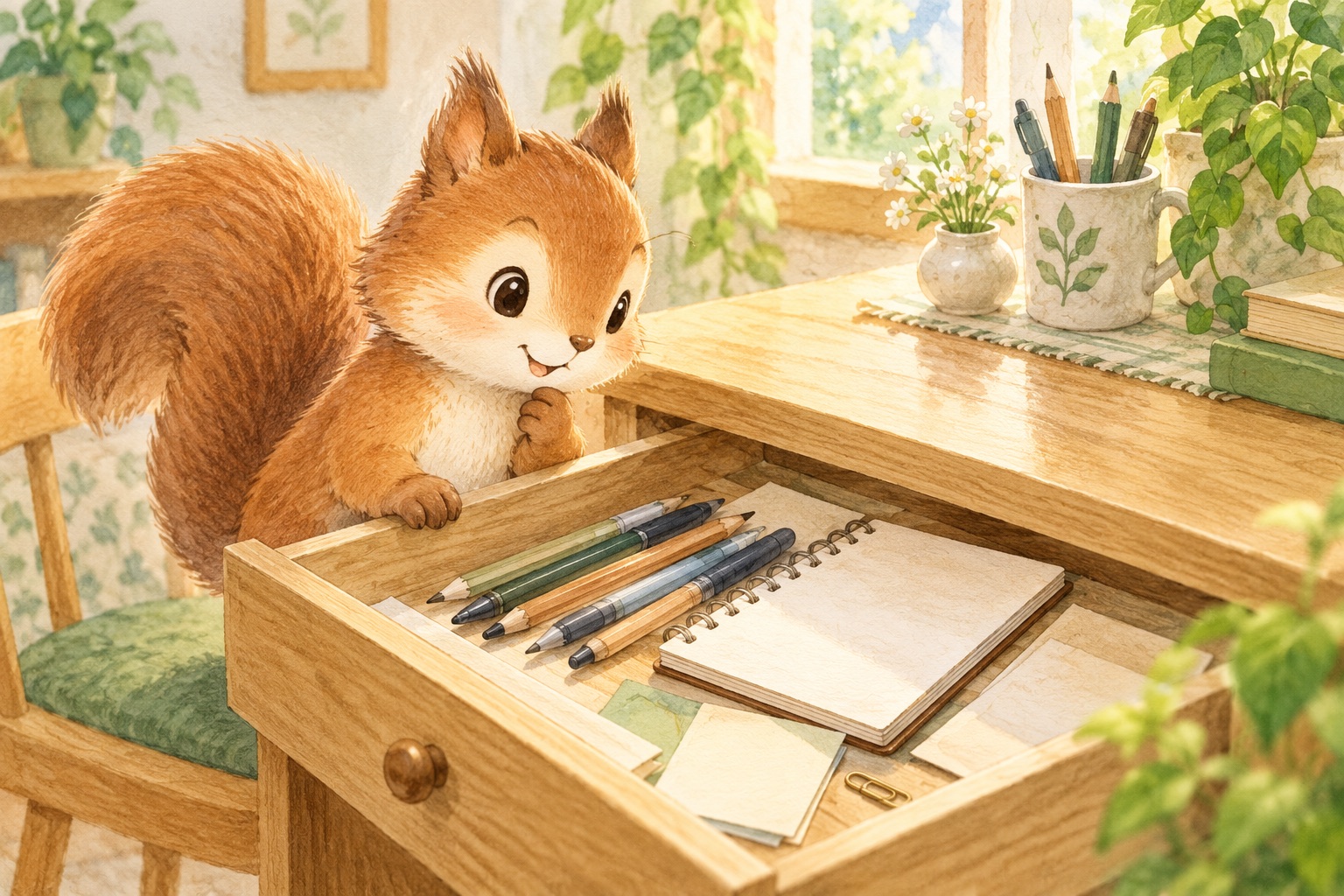
Any partly used pens or half-filled notebooks in your drawer? Before shopping for new stationery, make a little writing corner from what you have. Choose a working pen, spare pages and paper you could use today.
Start with five minutes and one drawer
An appealing pen or notebook can be hard to resist, and that pleasure need not disappear. But there can be room to check what is at home before buying the next one.
Start with one drawer or pen pot. Put the contents on an existing tray or sheet and see what is there. Five minutes is a guide, not a deadline to finish everything.
Today’s small rule is not to start shopping for storage. A shallow box or spare space is enough. Aim to find one usable item rather than perfect the entire drawer.
Test pens and sort them by purpose
Try pens and pencils on scrap paper. Check not only whether they write, but whether they suit your usual notes. There is no need to modify or dismantle something that does not work.
Sort by roles such as everyday notes, specific tasks and condition to check. The table below is explanatory, not a record of the author’s belongings or quantities.
You need not use everything daily. Keep colours or types required for work or study. Follow the product’s instructions for storage and suitable uses.
| Condition of the item | Where to keep it / how to use it today |
|---|---|
| Comfortable for everyday notes | Choose one for an easy-to-reach spot |
| Works, but has a limited purpose | Group it where you will remember that purpose |
| Not yet checked for usability | Keep it separate from confirmed working spares |
A half-used notebook can continue from the blank pages
Open the remaining pages of an abandoned notebook. You need not keep its original purpose. Choose a new role such as draft shopping lists, thinking notes or study practice.
For example, write “Daily notes start here” on the first blank page or use existing paper as a bookmark. These are suggestions you can try without buying sticky notes or a new notebook.
If you want to preserve old notes, keep using the same book. Depending on the binding and paper, avoid tearing pages out; a marker at an accessible page may be enough. Prioritise somewhere easy to write over a matching appearance.
One sheet can be enough for a small task
Paper blank on one side, or unused small sheets, may work for a short note. A single task such as “check on the way home” or “do tomorrow” may not need a full page.
An existing clip can keep sheets together. Otherwise, tuck them into a notebook or small box. The idea is not to buy more stationery to make notepaper.
Before reusing paper, check for personal or work information that should not remain visible. Paper unsuitable to give away or take outside needs another use. The illustrations show blank paper only.
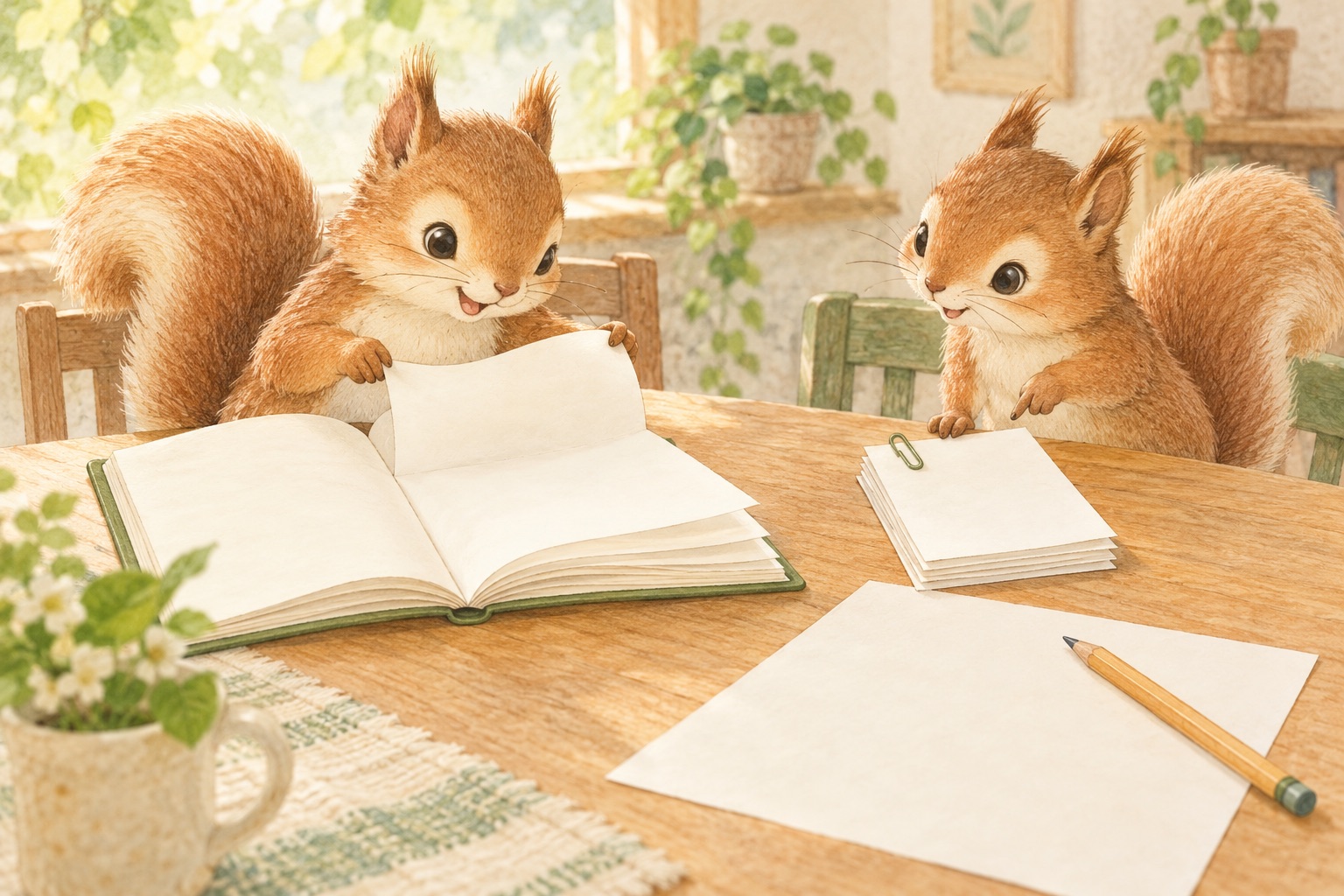
Before buying, can you name one missing purpose?
Sometimes you really cannot find the tool you need. You do not have to go without it. Choose after naming its role, such as a portable note-taking pen or a type required for a specific task.
If something already serves the same purpose, delaying the purchase is another option. This separates wanting something new from needing it immediately; it does not dismiss stationery preferences or enjoyment.
Any spending reduction depends on what you own and how you shop. Rather than assuming a fixed saving from not buying, ask whether you chose something you are happy to use.
Choose one thing for today and stop there
Before putting everything back, ask three questions. There is no need to write polished answers.
- What can I use right now? Choose one working pen or notebook with blank pages.
- What will I use it for next? Give it a task, such as today’s short note.
- Do I need to buy more now? Consider options only when a purpose is missing.
Put the chosen pen and notebook within easy reach. Even if everything else is not organised, your small writing corner is ready. With little time, testing one pen is enough.
Enjoying the next page of an existing notebook can sit alongside the pleasure of new stationery. Which thing in your drawer would you like to use today?
Final checklist
- Check one drawer or pen pot
- Test on existing paper and choose one pen for today
- Give spare notebook pages or paper a short-note purpose
- Identify a missing role before considering the next purchase
About this article
This article offers everyday ideas. Scenes, sorting examples and uses are explanatory, not records of the author’s experiences or belongings. Savings and fewer purchases are not guaranteed. Both images are illustrations.